


 English
 中文简体
中文简体 Español
 عربى
عربىIndustry News
Home / News / Industry News / WTB Connector Crimping Tips: Get Reliable, Low-Resistance Connections Every Time
If you've ever crimped a wire‑to‑board (WTB) connector and ended up with a loose terminal, intermittent signals, or a frustrating pull‑out failure, you're not alone. Crimping looks simple – squeeze a tool, done – but doing it right makes the difference between a connection that lasts years and one that fails in a few weeks.
This guide gives you WTB connector crimping tips that actually work on the bench and on the production line. No theory‑only advice. Just practical steps to avoid high resistance, wire breakage, and rework.
A bad crimp is the #1 cause of high contact resistance in WTB connectors – even more common than dirty pins or worn housings. Why? Because the crimp creates the electrical and mechanical link between your wire and the terminal. If that link is weak or resistive, you get voltage drops, heat, and eventually a burned connector.
The good news: with a few simple checks, you can turn a so‑so crimp into a rock‑solid one.
Using a generic pliers‑style crimper "because it fits" is the fastest way to ruin a WTB terminal. Real crimp tools have precision anvils and insulators designed for one terminal series (or a very small family).
Quick tip: If you're buying reels of loose terminals, invest in the official applicator or hand tool. The datasheet always lists the approved tool part number. Use it.
Strip length is where many crimps go wrong.
The golden rule: Strip so that the bare wire completely fills the conductor crimp barrel, and the insulation just touches the insulation crimp barrel (the rear wings). Most WTB terminals have a strip length marked in the datasheet – typically 2 mm–4 mm for small connectors.
Practical check: Before crimping, insert the stripped wire into the terminal. You should see bare wire flush with the front edge of the conductor barrel, and no bare wire beyond it.
Many people treat the rear wings as optional, but they're critical for strain relief. A good WTB crimp has two distinct sections:
1. Conductor crimp – Crushes the barrel around bare copper strands. This is your electrical contact.
2. Insulation crimp – Wraps around the wire jacket. This prevents the wire from pulling back and stressing the conductor crimp.
What a bad insulation crimp looks like: Wings that pierce the insulation (risks shorts) or don't close at all (no strain relief).
What good looks like: The wings form a gentle "bell" shape around the insulation, gripping but not cutting into it. When you tug the wire gently, the insulation doesn't slide out.
You don't need a fancy pull tester for basic validation. Here's a field‑proven method:
Warning: Do not pull on a crimped wire that's already inserted into a WTB housing – you risk unlatching the terminal. Pull on the terminal body directly.
For your own education, take one bad crimp and one good crimp, cut them in half with a fine saw or dremel, and look at the cross‑section under magnification. You'll see:
Once you know what a good cross‑section looks like, you'll never guess at crimp quality again. Many terminal manufacturers publish crimp dimension specifications – check height and width with a micrometer.
1. Crimping onto tinned wire without stripping cleanly – If the wire has old, dull solder or corrosion, that layer increases contact resistance. Strip back to bright copper.
2. Using the wrong wire gauge – A 28 AWG wire in a terminal designed for 22 AWG won't fill the barrel, Finding to loose crimps. Conversely, 22 AWG in a 28 AWG terminal damages strands.
3. Over‑crimping – Applying too much force cracks the terminal barrel or severs wire strands. The result is a mechanically weak connection that passes initial test but fails under vibration.
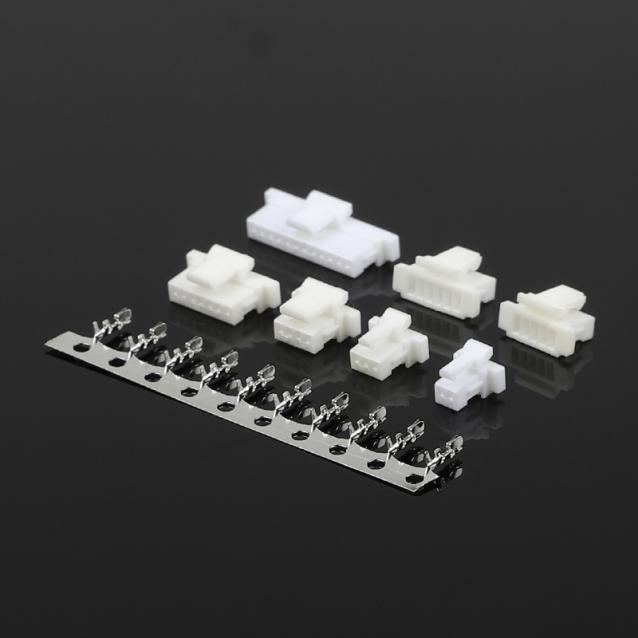
After crimping, the terminal must snap into the WTB housing. A surprising failure mode is crimping the terminal upside down or off‑center so that the retention lance (the little locking tang) doesn't engage.
The fix: Before inserting, glance at the terminal shape. The lance should be on the side that faces the housing's latch window. Also, make sure you didn't crush the lance during crimping – a mis‑adjusted tool can flatten it.
Pro move: After inserting, give the wire a gentle backward pull. You should hear or feel a click. If it comes out, the lance isn't locked.
These WTB connector crimping tips are based on thousands of field repairs and production reviews. The connectors themselves are usually fine. The crimp is where savings turn into scrap.
Take an extra 30 seconds per crimp: match the tool, strip precisely, check the insulation grip, and pull‑test. Your future self (or your customer) will thank you when the product runs for years without a single connection failure.
And remember: if you buy pre‑crimped leads from a supplier, ask for their crimp pull‑test data and cross‑section photos. A good supplier will be happy to share. A bad one will hesitate – and that's all the answer you need.


Copyright © Zhejiang Wenda Electronics Co., Ltd. All Rights Reserved

Custom Electronic Connectors Manufacturer

