


 English
 中文简体
 Español
 عربى
Industry News
Home / News / Industry News / Which Contact Plating Is Suitable for Board To Board Power Connectors in Harsh Environments
A connector may pass its initial electrical inspection and still develop contact problems after months of operation. Humidity can promote corrosion, vibration can gradually wear contact surfaces, and repeated insertion can remove parts of the protective coating. These problems become more serious in industrial equipment, automotive electronics and outdoor power systems, where replacing a faulty connector may require significant maintenance work.
The plating on a connector contact has a direct influence on how well it withstands these conditions. Gold, silver, tin and nickel each have different electrical and mechanical properties. Choosing between them requires more than comparing conductivity or material prices.
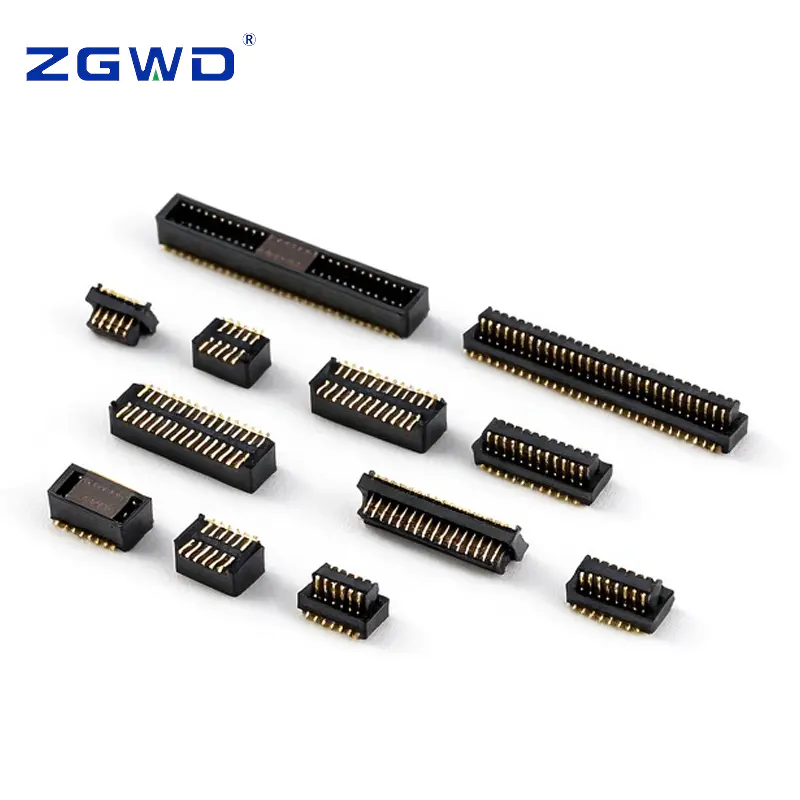
What Contact Plating Actually Does
Most connector contacts are made from copper alloys because they offer a useful combination of conductivity and mechanical strength. The problem is that exposed copper alloys can oxidize or corrode, potentially increasing electrical contact resistance.
Plating adds a protective surface layer to the contact. Depending on the material and coating thickness, it can improve corrosion resistance, reduce surface degradation and maintain more consistent electrical contact over time.
Its effectiveness depends on several details:
A more expensive plating material cannot compensate for poor contact geometry. The connector's mechanical design must work with the selected coating.
Gold, Silver, Tin and Nickel: How Do They Compare?
These four materials are commonly encountered in connector contact systems, but they serve different purposes.
| Contact Plating | Main Advantages | Potential Limitations | Typical Applications |
|---|---|---|---|
| Gold | Excellent corrosion resistance and stable contact performance | Higher material cost; relatively soft surface | Precision electronics and low-level signals |
| Silver | Very high electrical conductivity | Can tarnish in sulfur-containing environments | Selected high-current contacts |
| Tin | Economical and suitable for many power connections | Oxidation and fretting risks | General industrial power connectors |
| Nickel | Hardness and diffusion-barrier properties | Higher contact resistance than noble-metal finishes | Underplating and selected contact systems |
Gold is often selected when stable electrical contact and corrosion resistance are priorities. Silver is attractive where conductivity is particularly important. Tin remains widely used in cost-sensitive power connector designs, provided that contact force and environmental conditions are properly controlled.
Nickel is frequently used beneath another plating material rather than as the final contact surface. Its role in a multilayer coating system is different from that of gold, silver or tin.
When Gold Plating Is Worth the Additional Cost
Gold resists oxidation under many normal operating conditions, which helps maintain a relatively stable contact interface. This makes it useful in equipment exposed to humidity, temperature variation and repeated connection cycles.
However, gold is not automatically the best choice for every power connector. Its cost becomes significant when large contact areas or many connectors are involved. It is also relatively soft, so repeated mating can wear the coating if the thickness and contact design are inadequate.
Some manufacturers use selective gold plating, applying gold only to the actual contact area while using a less expensive finish elsewhere. This can reduce material costs without sacrificing the intended contact performance.
When reviewing a gold-plated Board To Board Power Connector, check the gold thickness, underplating material, contact coverage, mating-cycle rating and available wear-test results. A product described simply as gold-plated provides too little information for a meaningful comparison.
Silver and Tin for Power Applications
Silver has good electrical conductivity and can work well in contacts designed to carry relatively high currents. Its main weakness is tarnishing in environments containing sulfur compounds. Silver sulfide can form on the surface and affect contact behavior, particularly when the connector has insufficient contact pressure or wiping action.
Tin is a common alternative for industrial power connections. It offers a practical balance between cost and manufacturing requirements, but its surface can oxidize over time.
Vibration creates another concern. Small repeated movements between contacting surfaces can disturb the tin coating and contribute to fretting corrosion. As the contact interface deteriorates, electrical resistance may increase.
For equipment installed near motors, compressors or other vibrating machinery, engineers should pay particular attention to contact retention, mechanical stability and fretting performance. Plating selection alone will not solve a connector design that allows excessive movement.
Why Nickel Underplating and Coating Thickness Matter
Connector contacts often use more than one plating layer. A copper-alloy base may receive nickel underplating before the final gold, silver or tin coating is applied.
Nickel acts as a diffusion barrier, helping prevent copper from migrating into the outer plating. It also provides a relatively hard foundation for the finishing layer.
The thickness of each layer needs to match the intended application. A coating suitable for occasional connections may not withstand frequent mating. Contact force, wiping distance, operating temperature and expected service life all influence the specification.
Buyers should request actual coating measurements rather than relying on descriptions such as heavy gold plating or nickel finished. The applicable plating specification and inspection records should identify the coating material and thickness.
Match Plating to the Actual Operating Environment
Different installations expose connectors to different failure mechanisms. A connector inside an outdoor solar inverter may experience humidity and temperature cycling, while one installed in industrial machinery may face continuous vibration and oil contamination.
| Operating Environment | Main Concern | Plating Considerations |
|---|---|---|
| High Humidity | Corrosion and oxidation | Gold or a validated protective finish |
| Continuous Vibration | Fretting corrosion and contact movement | Tin or silver systems with suitable mechanical design and testing |
| High-Current Operation | Contact resistance and temperature rise | Silver or other qualified high-current contact systems |
| Frequent Mating | Surface wear | Gold thickness matched to mating-cycle requirements |
| Sulfur-Containing Atmosphere | Tarnishing | Silver requires specific environmental validation |
These are starting points, not universal selection rules. A connector exposed to several environmental stresses needs to be evaluated against their combined effects.
What Testing Should Buyers Request?
Plating should be evaluated on the finished connector rather than as an isolated material specification.
Contact resistance measurements help establish electrical consistency. Temperature-rise testing shows how the contact system behaves under rated current, while vibration and mating-cycle tests reveal potential mechanical deterioration.
Corrosion testing is also useful, but a salt-spray result alone does not establish suitability for every industrial atmosphere. Test conditions should reflect the actual exposure expected during service.
For power connectors, buyers should additionally check rated voltage, current capacity, insulation performance, creepage and clearance distances, and temperature limits. These characteristics remain important regardless of the selected plating material.
Specify the Contact Finish Before Approving the Connector
Gold, silver and tin each have their place in Board To Board Power Connectors. Gold suits applications where contact stability and corrosion resistance justify its cost. Silver can serve selected high-current designs, while tin provides an economical option for many industrial connections.
The final decision should account for current load, vibration, humidity, mating frequency and expected service life. Before approving bulk production, request coating specifications and connector-level test results. This provides a much clearer indication of long-term suitability than choosing a plating material based on its name alone.


Copyright © Zhejiang Wenda Electronics Co., Ltd. All Rights Reserved

Custom Electronic Connectors Manufacturer

