


 English
 中文简体
 Español
 عربى
Industry News
Home / News / Industry News / What Wire Gauge and Strip Length Should Buyers Specify for Cable Strip Connectors?
Choosing the right wire gauge and strip length for cable strip connectors sounds like a small detail. It's not. Industrial equipment, control panels, electrical assemblies, automation systems—get these specs wrong and even a good connector won't save you. The conductor won't fit right, or the insulation comes off wrong, and suddenly you've got a flaky connection. For manufacturers and bulk buyers, nailing down wire prep requirements upfront improves assembly consistency, cuts connection failures, and makes quality inspections less painful. The right specs depend on connector design, conductor construction, electrical load, and what the manufacturer actually requires.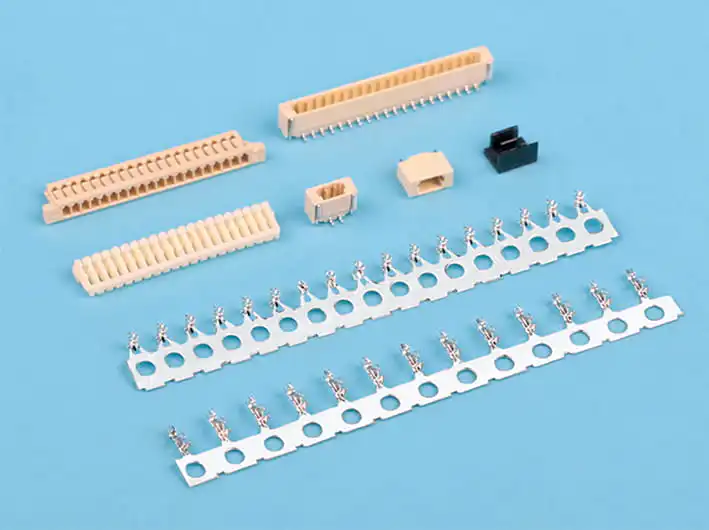
Why Does Wire Gauge Matter for Cable Strip Connectors?
Wire gauge tells you the size of the conductor. In North America, AWG is common. Internationally, you'll see cross-sectional area in mm². AWG works backwards—lower number means bigger wire. So 16 AWG is thicker than 20 AWG. If the wire is too small, the terminal might not grip it securely. Contact resistance climbs, connection goes intermittent. Too big? Won't fit the opening, or the clamping mechanism won't work right. Check the connector datasheet for the permitted wire-size range. Also confirm whether it applies to solid, stranded, or both—they behave differently during insertion and clamping.
How to Match Wire Gauge to Connector Specifications
The right gauge depends on terminal design, rated current, installation conditions, electrical requirements.
|
Wire gauge |
Approximate conductor area |
Typical application considerations |
|---|---|---|
|
24 AWG |
0.205 mm² |
Low-current signals and control circuits |
|
20 AWG |
0.518 mm² |
Electronic wiring and small control systems |
|
18 AWG |
0.823 mm² |
General control wiring and equipment connections |
|
16 AWG |
1.31 mm² |
Applications requiring a larger conductor |
|
14 AWG |
2.08 mm² |
Higher-current applications where the connector is rated accordingly |
These are approximate conversions, not universal compatibility rules. A connector may only support some of these sizes. Current capacity also depends on conductor material, insulation temperature rating, ambient temperature, installation method, contact resistance. Verify the complete connection system against the intended load and applicable safety standards.
What Strip Length Should Buyers Specify?
Strip length is how much insulation you remove to expose the conductor. The right length lets the conductor reach the contact area while keeping exposed metal within permitted boundaries. There's no single strip length for every connector. Terminal geometry and connection mechanism determine the required dimension. The manufacturer's datasheet or installation instructions should be your primary reference.
Wrong stripping causes problems:
For production orders, document the required strip length and tolerance in assembly drawings or manufacturing instructions. Reduces ambiguity between connector supplier and assembly team.
How Connector Design Changes Wire Preparation Requirements
Different mechanisms need different prep.
Screw-clamp connectors use a screw to secure the conductor. Exposed wire must reach the clamping area without leaving excess bare metal outside the terminal.
Spring-clamp and push-in connectors use spring pressure. Correct insertion depth is essential. Compatibility varies between solid, stranded, fine-stranded conductors.
Insulation displacement connectors (IDC) establish contact by displacing or penetrating insulation. These may not need conventional stripping. Follow the connector's specified wire dimensions and prep procedure.
Ferrules matter too when using stranded conductors. A ferrule changes the conductor's finished dimensions. Not every connector is approved for every ferrule configuration. Confirm compatibility before making ferrules part of the process.
Which Additional Specifications Should Buyers Provide?
Wire gauge and strip length are important, but a complete purchasing spec covers other characteristics.
|
Specification |
Information to confirm |
Why it matters |
|---|---|---|
|
Conductor size |
AWG or mm² |
Ensures the wire fits the terminal |
|
Conductor construction |
Solid, stranded, or fine-stranded |
Affects clamping and retention |
|
Conductor material |
Copper or an approved alternative |
Influences electrical performance and compatibility |
|
Insulation diameter |
Actual dimension or cable specification |
Ensures proper fit and insulation clearance |
|
Strip length |
Manufacturer-approved dimension and tolerance |
Supports consistent assembly |
|
Electrical requirements |
Rated current and voltage |
Confirms suitability for the application |
|
Operating environment |
Temperature, moisture, and vibration |
Helps determine material and connector requirements |
Providing these details before ordering makes it easier for suppliers to recommend compatible products and flag spec conflicts before production starts.
How Can Buyers Verify Connection Quality Before Production?
A documented spec should be backed by inspection and testing. Production teams can use suitable stripping tools and measurement gauges to maintain consistent wire prep. Visual inspections confirm the conductor is fully inserted, insulation is correctly positioned, no unintended bare copper is exposed. Inspectors should also check for damaged strands, loose clamping, incorrectly assembled terminals. Depending on the application, additional verification may include pull-out testing, electrical continuity checks, contact-resistance measurements, temperature-rise tests under specified conditions.
For bulk purchases, request the connector datasheet, installation instructions, applicable certifications, relevant qualification records. Safety-critical or regulated products may need additional testing under specific industry standards. Testing a representative wire-and-connector combination before mass production reveals compatibility problems early and cuts rework costs.
Specify Cable Strip Connectors for Consistent Assembly
Reliable cable strip connectors depend on matching the connector to the conductor and preparing the wire per the specified procedure. Buyers should confirm wire gauge, conductor construction, insulation diameter, and strip length before ordering. Clear documentation helps suppliers, assembly operators, and quality inspectors follow the same requirements. By verifying compatibility through sample assembly and appropriate electrical and mechanical testing, manufacturers can improve connection reliability and reduce preventable production defects.


Copyright © Zhejiang Wenda Electronics Co., Ltd. All Rights Reserved

Custom Electronic Connectors Manufacturer

