


 English
 中文简体
中文简体 Español
 عربى
عربىIndustry News
Home / News / Industry News / What is a Micro Board to Board Connector Used for in Compact Electronics
In compact electronics, space has become a quiet constraint that shapes almost every design decision. Devices are getting thinner, lighter, and more layered in structure. Inside these tightly arranged systems, components still need to communicate with each other in a stable way. This is where the micro board to board connector appears in many modern designs.
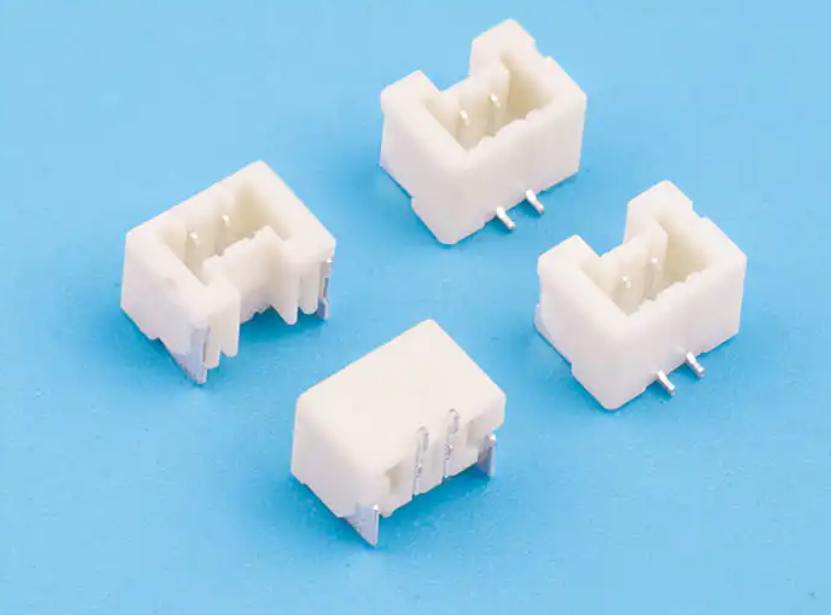
It is not a visible part of the final product. Most users never notice it. Yet it plays a role in keeping internal electronic layers aligned and connected when space is limited and movement tolerance is small.
Inside a small electronic device, there is often more than one circuit board. Instead of spreading everything on a single surface, designers stack layers. This helps save space and organize functions.
When boards are stacked, they still need a way to pass signals and power between them. Wires can be used, but they take space and can introduce instability when the structure becomes dense.
A micro board to board connector provides a direct bridge between two boards. It reduces loose routing inside the enclosure and supports a cleaner internal layout.
The idea is simple. Short distance, direct connection, minimal movement.
In compact products, this simplicity matters more than it seems at first glance.
Compact electronics often leave very little room for internal structure changes. Every millimeter matters. Components are arranged in layers that feel almost like stacked sheets.
A board to board connector is designed to sit between these layers without adding noticeable bulk. It works like a small alignment link, keeping boards in position while allowing communication between them.
The placement is usually vertical or parallel, depending on the structure of the device. Once installed, it becomes part of the internal framework rather than a separate element.
What makes it useful is not size alone, but how it supports stacking without forcing extra space.
In many designs, the connector becomes part of the structural logic. Boards are no longer independent pieces. They become a connected system.
These connectors appear in many compact electronic products where internal layering is necessary. The usage is not limited to one category.
They are often found in devices where multiple functions need to be packed into a small enclosure. Some handle control, others handle power distribution, and others manage signal flow.
A simple overview:
| Application area | Role of board stacking | Connector contribution |
|---|---|---|
| Wearable devices | Multiple sensing layers | Internal signal linking |
| Portable devices | Space-saving layout | Layer connection support |
| Communication units | Split functional boards | Stable data passage |
| Small control systems | Separated control modules | Internal bridging |
The exact role changes depending on the structure, but the purpose remains similar. Keep boards connected in a compact environment.
As devices shrink, internal design becomes more complex. Boards are placed closer together. Movement tolerance decreases. Even small misalignment can affect how parts interact.
One common issue is routing difficulty. When boards are close, running wires between them becomes harder to manage. Space for routing paths becomes limited.
A board to board connector reduces the need for extended wiring paths. It creates a direct interface between surfaces.
Another challenge is mechanical stability. In tightly packed systems, movement or vibration can affect connections. A structured connector helps maintain alignment between boards, reducing unwanted shifting.
There is also the issue of assembly complexity. When multiple boards need to connect, manual wiring can slow down production. A connector simplifies this step by turning it into a structured alignment process.
Design flexibility in compact electronics often depends on how freely internal space can be arranged. When everything is forced onto a single plane, options become limited.
Board stacking allows designers to divide functions across layers. One board can handle processing, another can manage power, and another can support input or output functions.
The board to board connector makes this separation practical. Without it, stacked designs would become difficult to maintain.
It also supports modular thinking. Instead of redesigning a full system, individual boards can be adjusted while keeping the connection structure stable.
This approach is often used in products that need compact size but also internal complexity.
Inside a stacked system, boards are placed in close proximity. The connector sits between them and creates a controlled link.
Even though it is small, it influences how the entire structure behaves.
The connection is not only electrical. It also helps maintain spacing and alignment between boards. This reduces uneven pressure inside the enclosure.
Over time, this structural alignment contributes to more stable internal behavior. Boards are less likely to shift out of position during handling or usage.
In many compact designs, the connector becomes part of the structural balance rather than just a transmission point.
As internal space becomes tighter, signal paths become shorter but also more sensitive to interference from nearby components.
A direct board to board connection reduces unnecessary travel distance for signals. This helps maintain clarity in transmission paths.
Shorter connections also reduce exposure to internal noise sources within the device. While compact systems cannot remove interference completely, they can reduce unnecessary complexity in routing.
The connector acts as a controlled pathway. Instead of signals moving through extended routes, they move directly between aligned surfaces.
This directness is one of the main reasons such connectors are widely used in compact electronics.
In mass production environments, small variations in assembly can affect how well boards align. This is especially true in compact systems where spacing is minimal.
A board to board connector must support repeated assembly without losing alignment consistency. This requires stable production methods and controlled structural design.
Factories often focus on repeatable behavior. When connectors behave consistently across batches, integration becomes smoother for device manufacturers.
Another important factor is tolerance to repeated handling. During assembly, boards may be connected and disconnected multiple times. The connector structure needs to maintain stable contact behavior through these cycles.
Manufacturing experience plays a role here. More stable production environments tend to produce more consistent connector behavior across different batches.
Miniaturization is not only about making things smaller. It is about fitting more function into less space without losing internal order.
Board stacking supported by micro connectors allows designers to reduce horizontal spread and move toward vertical arrangement.
This vertical structuring is one of the key approaches in modern compact electronics. It allows multiple functional layers to exist in a single housing.
Instead of expanding outward, designs grow inward in layers.
The connector becomes a silent link in this layered structure. It holds the system together while allowing each layer to maintain its own role.
Even though the connector itself is small, it influences overall layout planning.
One consideration is alignment. Boards must be positioned accurately so that connection points meet correctly.
Another is spacing. Too much or too little distance between boards can affect how the connector performs within the structure.
Mechanical support is also important. In compact devices, internal movement must be controlled to avoid stress on connection points.
Designers also consider how the connector fits into the overall assembly process. If installation is too complex, it can slow down production flow.
These considerations are usually addressed early in the design phase, since changing them later can affect the entire internal layout.
As devices continue to shrink, internal structure becomes more layered and more dependent on short-range connections.
The micro board to board connector remains relevant because it supports this shift without requiring major redesign of internal logic.
It allows compact systems to stay organized while still increasing functional density.
Even as other connection methods evolve, the basic idea remains useful. Direct alignment, short path, structured connection.
In compact electronics, simplicity inside often supports complexity outside.


Copyright © Zhejiang Wenda Electronics Co., Ltd. All Rights Reserved

Custom Electronic Connectors Manufacturer

