


 English
 中文简体
中文简体 Español
 عربى
عربىIndustry News
Home / News / Industry News / What Causes Poor Connection in Board to Board Pins and How to Avoid It
Board to board pins are widely used in compact electronic systems where space is limited but stable signal transfer is still required. They connect two circuit boards directly, allowing devices to stay small while maintaining internal communication.
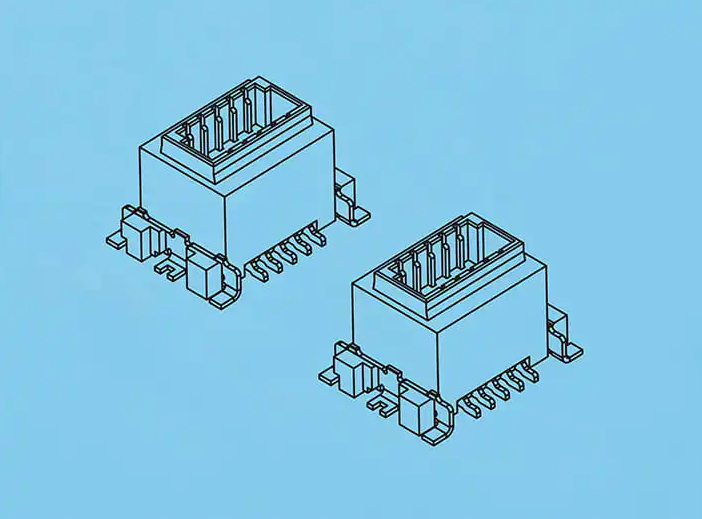
When everything works as intended, the connection is stable and consistent. But in real production and real environments, small issues can appear. These issues do not always stop the device completely. More often, they show up as instability, signal fluctuation, or performance drops that are hard to trace at first.
Poor connection problems rarely come from a single reason. They usually build up through design decisions, assembly conditions, and external influence.
Board to board systems rely on precise positioning. Unlike loose wiring, these connectors depend on accurate alignment between two rigid surfaces.
Even a small shift can change how pins touch each other. Sometimes the contact is partial rather than full. That small difference can affect signal stability.
Misalignment can happen during different stages:
The challenge is that misalignment is not always visible. A connector may still "fit," but the internal contact may not be fully stable.
Over time, this can find to intermittent issues that appear without a clear pattern.
Even when alignment is correct, the surface condition of the pins and pads plays a major role in performance.
Metal surfaces are sensitive. They can change slightly due to air exposure, storage conditions, or handling. These changes are often very small, but electronic contact depends on precision.
Common surface-related factors include:
These conditions create micro barriers between contact points. The connection still forms, but it may not be stable under movement or vibration.
This is why two identical-looking connectors can behave differently in real use.
Mechanical pressure is another factor that often gets overlooked. Board to board pins depend on balanced force. If pressure is uneven, contact quality changes.
In some designs, pressure is concentrated on one side of the connector. In others, the boards may flex slightly during installation or operation.
Situations that introduce mechanical stress include:
When pressure is not balanced, some pins carry more load than others. Over time, this imbalance can reduce contact consistency.
In compact devices, space limitations make this even more sensitive.
Board to board connectors are sometimes disconnected during testing or maintenance. Each connection cycle adds small mechanical changes.
At first, the impact is minimal. But over repeated cycles, small wear begins to accumulate.
Possible effects include:
The change is gradual. Devices may work normally in early stages, then begin showing intermittent issues later.
This is why some designs limit unnecessary reconnection cycles during production and testing.
Working surroundings quietly change how connectors hold up, and their impact should never be overlooked. Even perfectly engineered assemblies will suffer unstable contact performance after long exposure to outside elements.
The main environmental factors at play are listed below:
Prolonged contact with damp air slowly alters metal surface properties. Fluctuating temperatures also shift circuit board and connector alignment bit by bit.
These problems do not pop up all at once. They develop slowly over time, so it's tough to spot warning signs at an early stage.
Most connector faults stem from miscommunication in the design phase, long before manufacturing starts. They happen when electrical circuit layouts and mechanical housing plans fail to match up.
Mismatched board gaps, uneven connector heights or flawed shell structures create constant physical strain on the whole assembly.
Typical design flaws that lead to bad connections:
No matter how premium your connector parts are, they will malfunction if mechanical and electrical drawings clash.
Getting hardware and circuit designers to coordinate from the very start cuts of these avoidable risks.
| Cause | What happens in practice | Simple prevention approach |
|---|---|---|
| Misalignment | Partial or unstable contact | Improve positioning accuracy during assembly |
| Surface contamination | Increased resistance or signal fluctuation | Keep clean handling and controlled storage |
| Uneven mechanical pressure | Some pins overloaded, others weak | Balance structure and fastening points |
| Repeated connection cycles | Gradual wear of contact area | Reduce unnecessary reconnecting |
| Environmental influence | Moisture or dust interference | Use protective enclosure or sealing |
| Design mismatch | Poor engagement between boards | Align mechanical and electrical design early |
Even when design is correct, assembly still plays a major role in final performance.
Small handling differences during assembly can change how connectors behave later.
Helpful practices include:
In many cases, connection instability is not caused by the part itself, but by how it is installed.
Consistency during assembly helps maintain predictable performance.
Few electronics sit completely still during service. Devices shake from internal running parts, constant movement or nearby machinery.
Continuous vibration slowly wears down connector stability.
Over extended use, these outcomes will emerge:
Vibration rarely triggers total breakdown right away. It slowly weakens connection reliability bit by bit.
Products for mobile or industrial settings always require connectors built to withstand persistent shaking.
Connectors sit in warehouses and transit long before being mounted onto boards. These seemingly ordinary stages leave a noticeable mark on their later performance.
While kept in storage, connectors face multiple hazards:
Even minor surface oxidation or contamination during storage ruins contact precision after assembly.
That's why factories strictly regulate packaging and storage standards for all connector parts.
Early testing is one of the practical ways to reduce failure risk. It does not need to be complex. Simple checks can already reveal weak points.
Useful early checks include:
These checks help identify problems before full production scale begins.
Fixing issues early is usually simpler than correcting them after deployment.
Design decisions set the foundation for connector performance. Once a system is built, many factors cannot be easily changed.
Important design considerations include:
A design that works only in ideal conditions may fail in real environments. Long-term stability depends on how realistic the design assumptions are.
What is the common cause of poor connection in board to board pins?
Misalignment and surface condition issues are among the common causes.
Can vibration really affect connector stability?
Yes, repeated vibration can gradually reduce contact stability over time.
Are connection problems always caused by manufacturing defects?
No, many issues come from assembly, design coordination, or environmental exposure.
How can poor connection be prevented in production?
Through better alignment control, clean handling, balanced design, and early testing.
Do repeated connections always damage board to board pins?
Not always, but repeated cycles can gradually increase wear and reduce consistency.


Copyright © Zhejiang Wenda Electronics Co., Ltd. All Rights Reserved

Custom Electronic Connectors Manufacturer

